



The B-2 Residential Remodeling license is a California contractor classification issued by the Contractors State License Board (CSLB) for contractors who perform remodeling and improvement work on existing residential structures. This classification applies to projects that update, repair, or improve homes rather than new ground-up construction.
B-2 projects are residential remodeling jobs that require the use of three or more unrelated building trades or crafts under a single contract.
The B-2 Residential Remodeling license does not permit new construction or major structural modifications. When a project requires structural work or falls outside the B-2 scope, a B General Building Contractor license or an appropriate C-class specialty license may be required.
DIVISION 3. PROFESSIONS AND VOCATIONS GENERALLY [5000 - 9998.11]
CHAPTER 9. Contractors [7000 - 7191]
ARTICLE 4. Classifications [7055 - 7059.1]
7057.5. (a) A residential remodeling contractor is a contractor whose principal contracting business is in connection with any project to make improvements to, on, or in an existing residential wood frame structure, and the project requires the use of at least three unrelated building trades or crafts for a single contract.
(b) (1) A residential remodeling contractor may take a prime contract for trades or crafts which may include, but is not limited to, the following:
(A) Drywall.
(B) Finish carpentry.
(C) Flooring.
(D) Insulation.
(E) Painting.
(F) Plastering.
(G) Roof repair.
(H) Siding.
(I) Tiling.
(J) Installing, repairing, or replacing electrical fixtures, such as dimmers, fans, lights, outlets, and switches.
(K) Installing, repairing, or replacing plumbing fixtures, such as faucets, sinks, toilets, and tubs.
(L) Installing, repairing, or replacing mechanical fixtures, such as air filters, air delivery and return grills, and preassembled exhaust fans.
(2) A residential remodeling contractor shall not take a contract unless the contract includes three or more unrelated trades or crafts.
(3) Subject to the limit described in paragraph (2), a residential remodeling contractor may self-perform its contract or may subcontract any of the trades or crafts to appropriately licensed subcontractor or subcontractors.
(c) A residential remodeling contractor shall conduct its contracting activity in accordance with the following restrictions:
(1) A residential remodeling contractor shall not contract for a project that includes the following trades or crafts unless the contractor holds the appropriate license classification or subcontracts with an appropriately licensed contractor:
(2) A residential remodeling contractor shall not contract to make structural changes to load bearing portions of an existing structure, including, but not limited to, footings, foundations, load bearing walls, partitions, and roof structures.
(3) (A) The residential remodeling contractor shall not contract to install, replace, substantially alter, or extend electrical, mechanical, or plumbing systems or their component parts, or the mechanisms or devices that are part of those systems, unless the residential remodeling contractor holds the appropriate license classification or subcontracts with an appropriately licensed contractor.
(B) The residential remodeling contractor may contract to make minor alterations to existing electrical, mechanical, or plumbing systems to effectuate the purpose of installing, repairing, or replacing electrical, mechanical and plumbing fixtures, provided that the contract requires the use of at least three unrelated building trades or crafts.
(C) The board may adopt regulations to further define what activity constitutes the minor alterations described in subparagraph (B), and to further define the electrical, mechanical, or plumbing systems, or their component parts, or the mechanisms or devices that are part of those systems, that are subject to the restriction described in subparagraph (A).
(d) This contractor classification may be cited as the B-2 Residential Remodeling Contractor.
(Added by Stats. 2020, Ch. 364, Sec. 3. (SB 1189) Effective January 1, 2021.)
B-General Building vs. B-2 Residential Remodeling
Visit B-General Building Classification page
*Framing or Rough Carpentry cannot be counted as an unrelated trade.
An applicant applying for a B-General Building license must have four (4) years of journeyman-level experience performing or directly supervising framing or rough carpentry AND two (2) unrelated core trades (e.g., plumbing, electrical, HVAC, roofing, concrete).
Framing or Rough Carpentry experience is REQUIRED for the B-General Building classification.
An applicant applying for a B-2 Residential Remodeling license must have four (4) years of journeyman-level experience performing or directly supervising at least three (3) unrelated trades related to remodeling.
Examples include floor installation, painting, cabinet installation, tile work, and similar trades.
Framing or Rough Carpentry experience is NOT required for the B-2 classification.
Obtaining a California B-2 Residential Remodeling Contractor license is an important step for contractors who want to legally perform residential remodeling work in the state. The licensing process is regulated by the Contractors State License Board (CSLB) and involves meeting experience requirements, submitting an application, passing state exams, and completing final licensing steps. The overview below outlines how the process works from start to finish.
1. Determine Eligibility Requirements
Before applying, you must meet the CSLB’s basic eligibility requirements:
Every applicant has to pass the Law & Business exam and the Trade exam before the license is issued.
Not sure which one to apply for? Compare all California contractor license classifications before you choose yours.
*A qualifying college degree may substitute for up to 3 years of the required experience.
2. Submit an Application
Submit a completed application to the California Contractors State License Board (CSLB). Applications must be filled out accurately, include the required residential remodeling work experience information, and be accompanied by the $450 application fee for new applications.
3. Pass the Required Examinations
After your application is approved, you will receive instructions from the CSLB to schedule your exams with PSI Exams, the testing provider for California contractor licensing. Applicants must pass two exams:
4. Complete Final Requirements
Before your license can be issued, you must complete the remaining CSLB requirements. These typically include Live Scan fingerprinting, filing a contractor license bond, obtaining workers’ compensation insurance if you have employees, completing any required CSLB exams, and paying the initial license fee.
5. License Issuance
Once all requirements are met, the CSLB will issue your California B-2 Residential Remodeling Contractor license. You will receive your official license number and wall certificate.
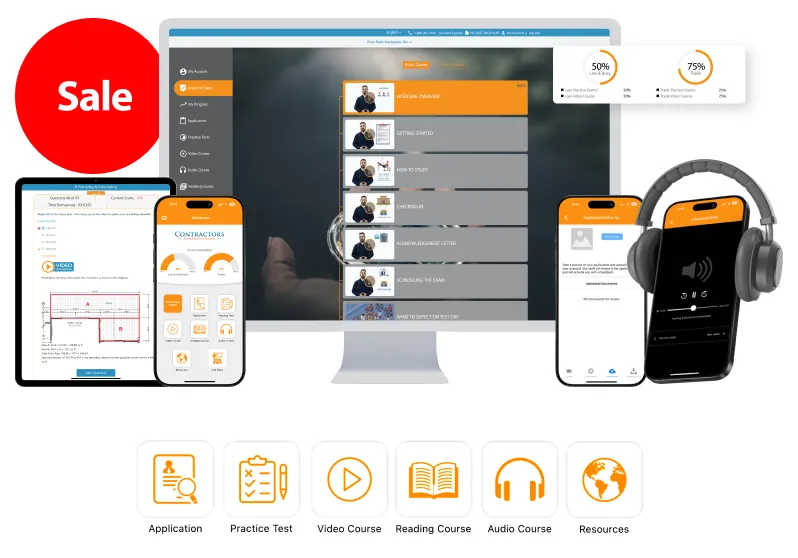
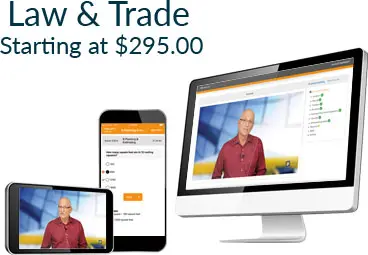
Includes online access to Law & Trade videos, audio, reading and practice exams
 $495.00
Regular Price: $595.00

 Live Streaming Class
Includes Full Online Course
$595.00
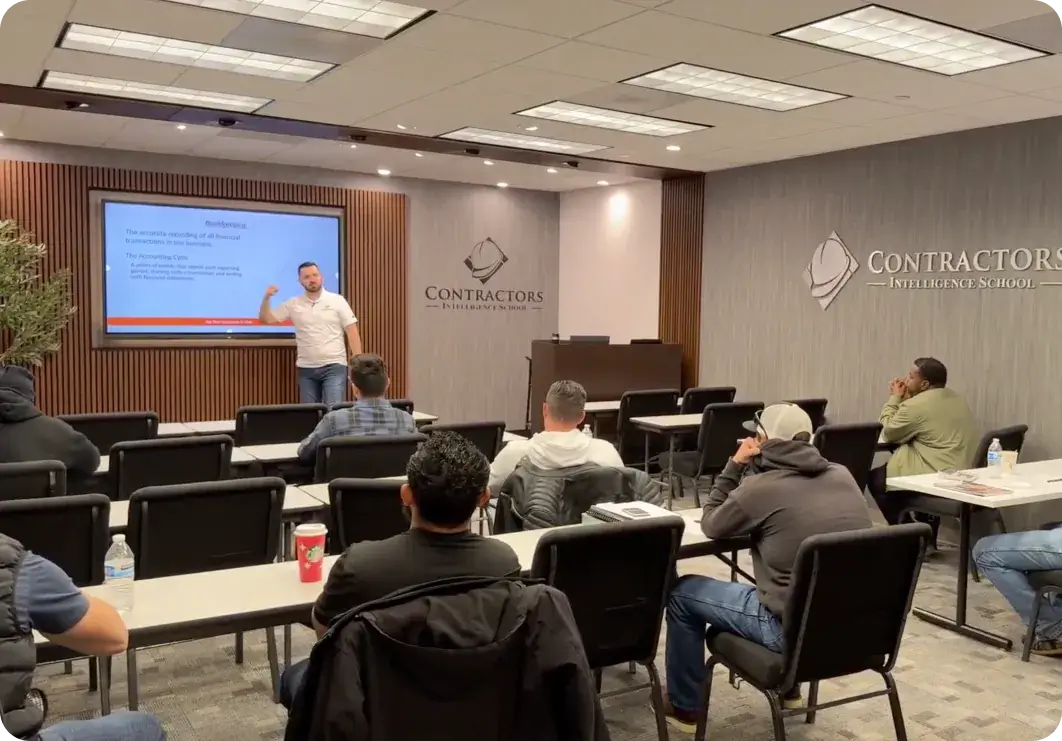
Our live classes are available throughout California.
$595.00

Comes with a 120-day complimentary access to our online tests
$395.00
If you’re looking for a more detailed walkthrough, this guide breaks down how to obtain a California B-2 Residential Remodeling Contractor License, from meeting the basic licensing requirements to preparing for the required exams and completing final licensing steps.
If you’re preparing to pursue your B-2 Residential Remodeling Contractor License, our structured course is designed to help you prepare for the CSLB exams while gaining a clear understanding of California licensing requirements and residential remodeling practices covered on the test.
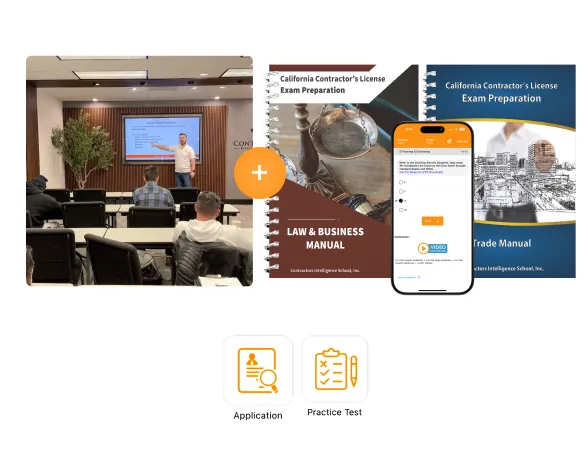
Prepare your CSLB application independently using our Exclusive iApplication Prep Tool™, Intelligent by Design. This dynamic, guided system collects your information through a series of prompts and generates a completed CSLB application, ready for download, signatures, and submission.
If you want extra peace of mind, you can upgrade to Expert Application Review & Filing. A licensing specialist will review your completed application for accuracy and compliance, and we will file it on your behalf to help reduce delays, rejections, and costly mistakes.

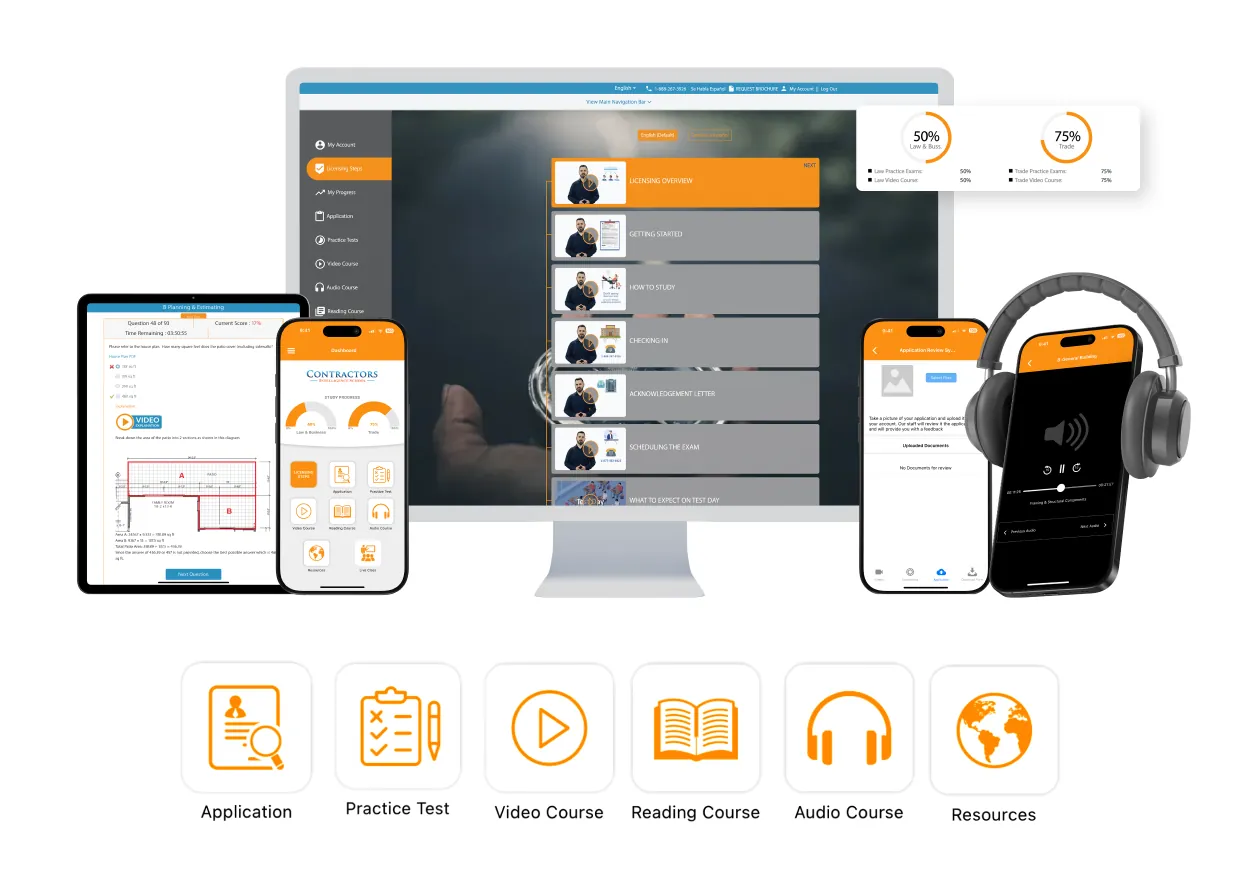
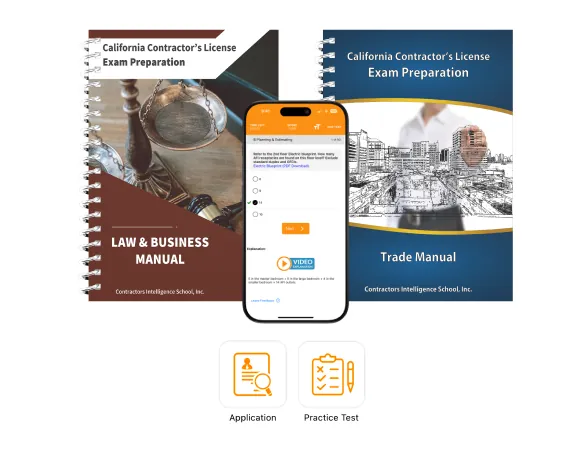
To familiarize yourself with a state testing system, real exam structure, and question formats, you'll get access to mock tests available online or via our mobile app. They simulate real exam conditions to help you test the waters before state exams.

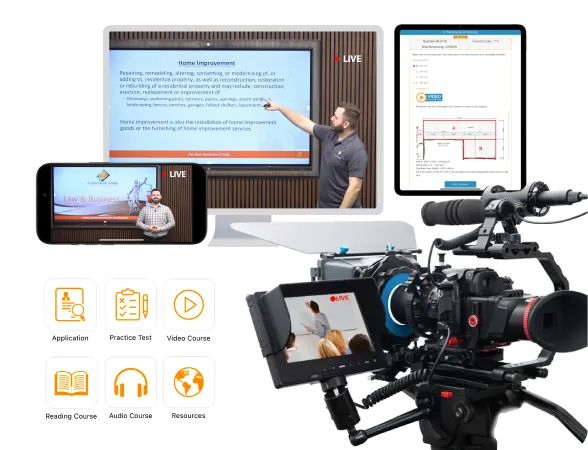
You’ll get access to comprehensive, well-structured, and illustrated materials covering all related topics for trade and law exams, including study guides, textbooks, online lectures, and live instruction classes, depending on the study option you choose.

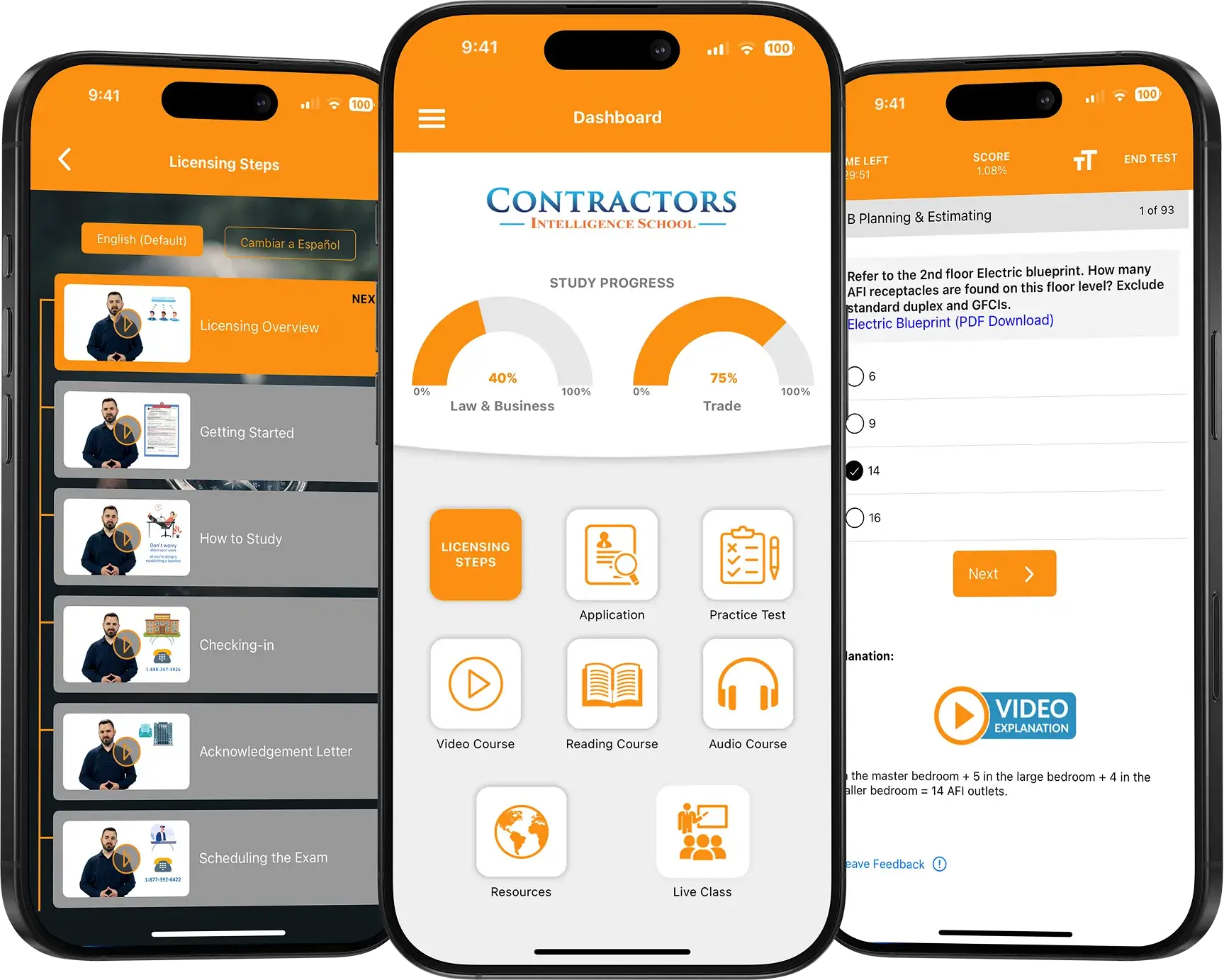
Compatible with over 8,000 devices
When you enroll in any of our courses, you’ll get full access to our powerful mobile learning app, designed to help you study on your schedule. Whether you're on the job site, at home, or on a break, you can study when it's most convenient for you.


 Included free with every course.
Access available to enrolled students only
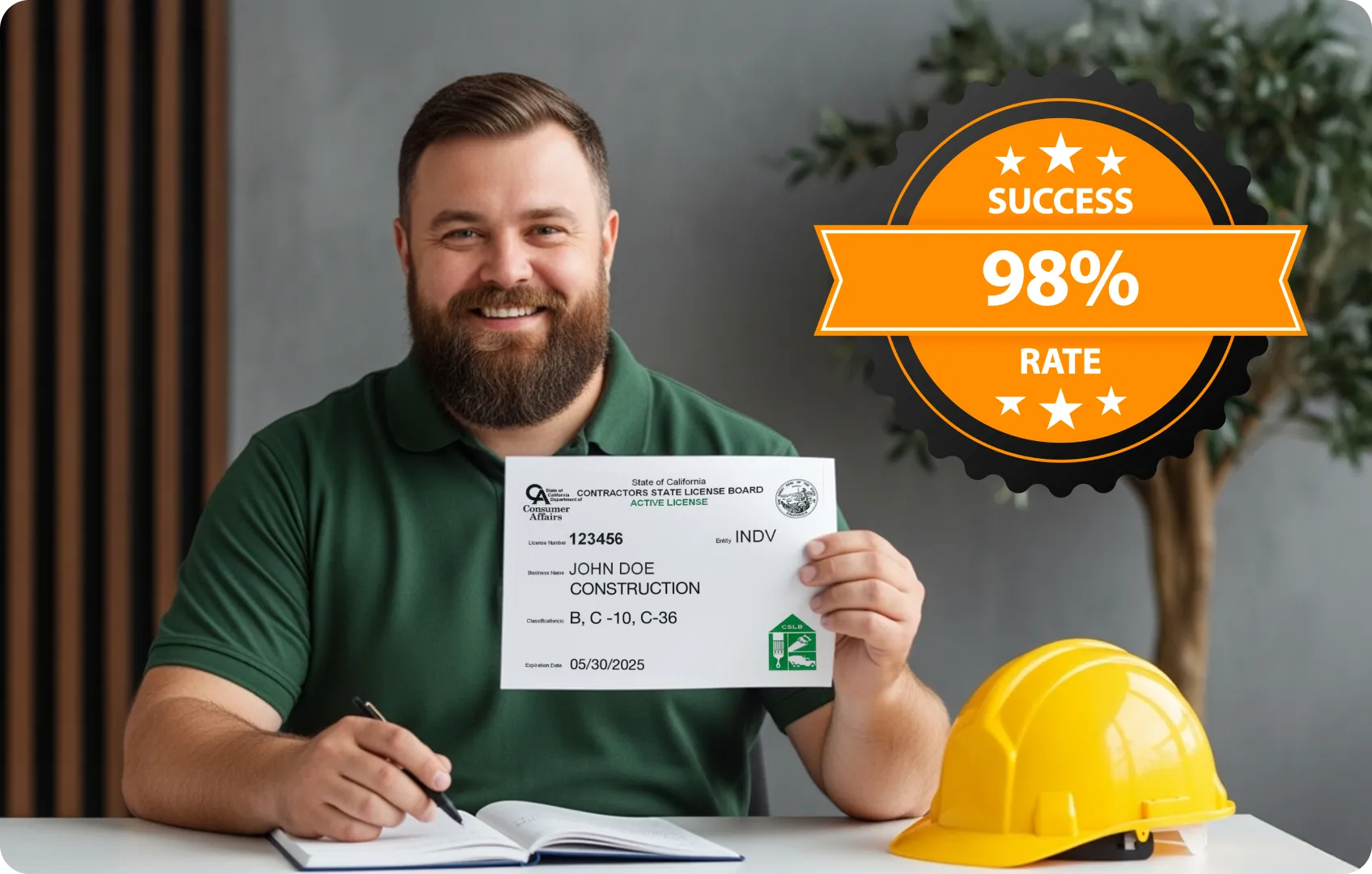
Our B-2 Residential Remodeling Contractor license courses come with a 100% Pass Exam Money-Back Guarantee. We'll even cover your re-test fee if you do not pass your B-2 Residential Remodeling Contractor license exam.
To obtain a B-2 Residential Remodeling Contractor license, applicants must meet the Contractors State License Board (CSLB) experience requirements, submit an application, pass both the Law and Business exam and the B-2 Residential Remodeling trade exam, and complete all final licensing requirements before the license is issued.
The timeline varies based on your experience level, exam preparation, and how quickly you complete the application and testing process. Some applicants are able to complete the process in as little as 2 months, while others choose a longer preparation timeline depending on their study pace and readiness.
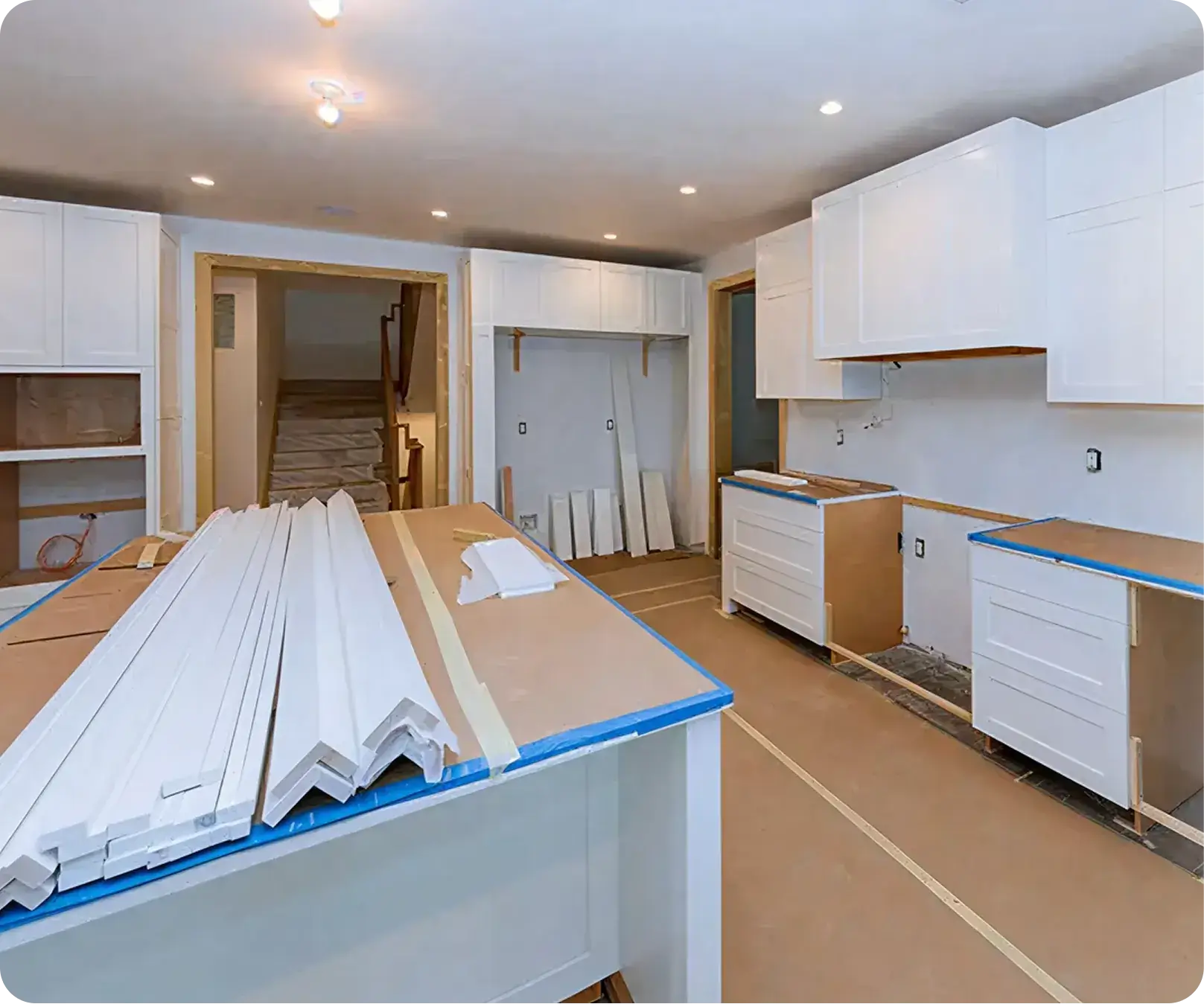
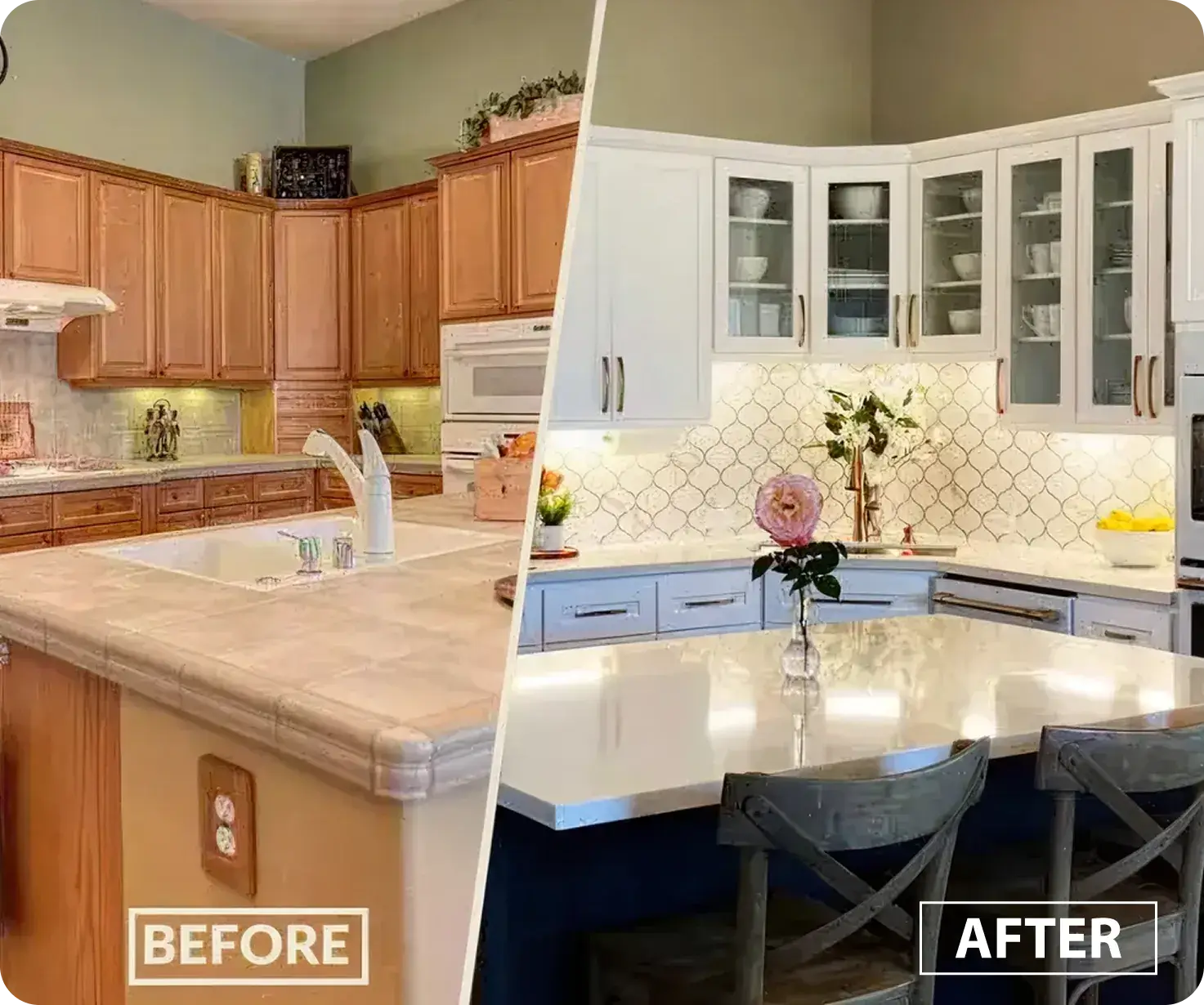
A licensed B-2 Residential Remodeling Contractor may perform qualifying remodeling and improvement work on existing residential structures. Common projects include:
Ground-up construction and major structural modifications are not permitted under the B-2 classification and require a different license.
Get expert guidance with your CSLB application and exam preparation so you can get licensed quickly and grow your business with confidence.
Prefer to talk it through? Call us and get personalized advice from our friendly support team.
 1-800-425-7570