
CSLB Corporation License Guide: Why Contractors Choose to Incorporate
Content table
- CSLB Corporation License Guide: Why Contractors Choose to Incorporate
- What Is a CSLB Corporation License in California and How It Works
- How to Register Your Corporation with the California Secretary of State
- The Tax Fork: C-Corp vs. S-Corp
- What Daniel Took Away
- CSLB RMO Requirements and Corporate Personnel You Must List
- When You Need a New CSLB License Number for a Corporation
- The 2026 Checklist: What to Prepare Before Applying
- Beyond the License: Maintaining the Corporate Shield
- How to Apply for a CSLB Corporation License with Confidence
Daniel had spent years in the field. He had worked for small crews and large operations alike, seeing firsthand why some companies thrived while others collapsed.
He had watched seasoned contractors lose their homes or personal savings to a single workplace accident or a legal dispute, simply because there was no separation between their work and their lives.
Through it all, Daniel gained world-class experience, but he realized that to build a real legacy, he needed more than just a truck and a tool belt. He needed a structure that could protect what he had built.
He knew that if he wanted to sign high-stakes contracts and protect his family's future, the business could not just be an extension of himself. It had to be its own entity. When he finally sat down with his CPA, Daniel's mind was already made up: "I'm ready to incorporate."
What Is a CSLB Corporation License in California and How It Works
For Daniel, forming a corporation meant more than a name change. It meant creating a separate legal entity that would operate independently from him as an individual.
Instead of the license being tied to him personally, it would belong to the corporation itself. The company, rather than Daniel, would be the party entering agreements, taking on high-stakes projects, and assuming responsibility for work performed.
In California, the CSLB issues the license to the business entity, treating it as its own legal person. Daniel understood that if he wanted to build something that could scale and eventually be passed on, it needed to exist beyond his own name.
That separation required precision. The name on the license had to match Secretary of State records exactly, and every contract, bid, and permit had to reflect the corporation as the responsible party.

How to Register Your Corporation with the California Secretary of State
Before Daniel could move forward with the CSLB, there was one prerequisite: the corporation had to exist first.
Rather than navigating the process on his own, Daniel hired corporation services for contractors to ensure everything was set up correctly from the beginning. He had seen too many companies run into problems over small formation mistakes and name mismatches.
Once the Articles of Incorporation were filed with the California Secretary of State, the corporation officially came into existence. That also opened the door to the next major decision: tax structure.
The Tax Fork: C-Corp vs. S-Corp
1. C-Corporation Explained: Tax Structure and Implications for Contractors
A C-Corporation is treated as a separate tax entity, meaning the business itself pays taxes on its profits. Current rates are 21% federally and 8.84% in California.
The key concept Daniel had to understand was double taxation. If profits are distributed as dividends, earnings are taxed first at the corporate level and again at the individual level.
This structure is often used when profits are being retained in the business for heavy reinvestment into equipment or expansion.
2. S-Corporation (Common Contractor Strategy)
An S-Corporation is not a separate entity type; it is a tax election. The corporation itself does not pay federal income tax, and income passes through directly to Daniel's personal return.
In California, the corporation still pays a 1.5% tax on net income and the required $800 minimum franchise tax.
- Daniel pays himself a reasonable salary subject to payroll taxes.
- Additional profits can be taken as distributions that are not subject to self-employment tax.
What Daniel Took Away
After reviewing both options, Daniel understood this decision had nothing to do with CSLB licensing. The Board does not distinguish between a C-Corp and an S-Corp for licensing purposes.
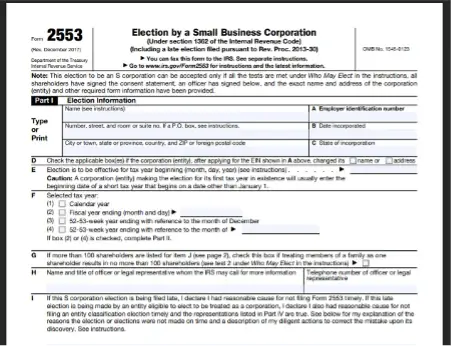
The choice came down to financial strategy. Based on his advisor's guidance, Daniel elected S-Corporation status, and Contractors Intelligence School submitted IRS Form 2553 on his behalf within the required federal timeframe.
CSLB RMO Requirements and Corporate Personnel You Must List
Forming the corporation was only part of the process. The California Secretary of State required formal officer designations, and the CSLB required a clear structure showing who was responsible for construction operations.
Daniel's corporation listed a President, Secretary, and Treasurer. As sole owner, he held all three roles.
The most critical role was the Qualifying Individual. Daniel designated himself as the Responsible Managing Officer (RMO), using his experience to qualify the company.
This was not just a title. The CSLB expects the RMO to be genuinely involved in day-to-day supervision or direct hands-on operations.
The corporation also needed a $25,000 contractor bond in the company name. Because Daniel retained ownership and control, no additional qualifying individual bond was required in his case.
When You Need a New CSLB License Number for a Corporation
Daniel started from scratch, but he met another contractor, Miguel, who had been operating as a sole proprietor and assumed his existing license number would automatically transfer to a corporation.
For contractors transitioning to a corporation, CSLB only allows license number reissuance when the individual license holder owns at least 51% of the corporation and the business remains substantially the same.
If those conditions are not met, the corporation is treated as a new entity and must apply for a new license number.
The 2026 Checklist: What to Prepare Before Applying
- Form the corporation: register with the Secretary of State and confirm the entity is Active.
- Designate the qualifier: establish the RMO and confirm experience requirements.
- Submit the application and pass required CSLB testing.
- Finalize compliance: obtain the contractor bond, workers' compensation, fingerprints, required fees, and pass the asbestos open-book exam.
Beyond the License: Maintaining the Corporate Shield
Getting licensed is the beginning, not the finish line. In California, if a corporation falls out of good standing with the Secretary of State, including missed filings or unpaid annual franchise taxes, CSLB can automatically suspend the contractor license.
Daniel also had to maintain the legal separation between himself and the business. Finances had to stay separate, and the corporation had to function as an independent entity.
Handled correctly, that corporate shield supports long-term growth, larger opportunities, and stronger protection.
How to Apply for a CSLB Corporation License with Confidence
Daniel approached incorporation the same way he approached every major career decision: with a clear plan.
Instead of navigating Secretary of State filings and CSLB requirements alone, he partnered with Contractors Intelligence School to ensure the corporation was structured correctly and he was fully prepared for the licensing process.
If you are ready to build your own corporation the right way from the start, Contractors Intelligence School offers incorporation support and exam preparation built for California contractors.
Published on: April 15, 2026







 $495.00

 Live Streaming Class


 Limited Time Offer | Save $500
 Full Online Course