California Contractor License Cost Breakdown: Fees, Bonds, Insurance, and Exam Prep


Content table
- Quick Answer: What Does a California Contractor License Cost?
- CSLB Application, License, Examination, and Fingerprinting Fees
- How Much Does the $25,000 California Contractor Bond Cost?
- California Contractor Exam Preparation Costs
- California Contractor License Costs by Business Structure
- General Liability and Workers' Compensation Insurance Costs
- Recurring Costs After You Get Licensed
- California Contractor License Cost FAQs
- California Contractor License Cost Checklist
For a typical applicant, the first-year cost can range from approximately $1,262 as a Sole Owner to about $7,009 as an LLC. The biggest factor influencing your total expense is how you choose to structure your contracting business.
A California contractor license is issued to a specific business entity. That means you will need to decide whether you are applying as a Sole Owner, Partnership, Corporation, or Limited Liability Company (LLC) right from the start. If your business entity changes later on, a brand-new contractor license may be required.
The business structure you choose affects your upfront CSLB fees, business-formation costs, state taxes, bonding requirements, insurance obligations, and ongoing overhead expenses.
Quick Answer: What Does a California Contractor License Cost?
Here is what a new applicant might expect to spend during their first year based on their chosen business structure:
| Business Structure | Estimated First-Year Cost | Main Cost Drivers |
|---|---|---|
| Sole Owner | $1,262 – $1,562 | CSLB fees, PSI exams, fingerprinting, contractor bond, exam prep. |
| Partnership | $1,412 – $1,712 | Higher non-Sole Owner license fee, PSI exams, fingerprinting, contractor bond, exam prep. |
| Corporation | $1,909 – $2,209 | Non-Sole Owner license fee, business formation, PSI exams, contractor bond, exam prep. |
| LLC | $6,709 – $7,009 | Business formation, $100,000 LLC bond, $1M liability insurance, $800 annual LLC tax. |
These estimates assume one CSLB classification, two PSI examinations, approximately $75 for fingerprinting, a current $139 contractor bond rate for a newly licensed business, and $295 to $595 for exam preparation.
For the Corporation and LLC examples, we use $497 as an estimated business-formation cost based on Contractors Intelligence School's current formation services.
The LLC estimate also includes approximately $2,000 per year for the required $100,000 LLC Employee/Worker Bond, approximately $2,000 per year for the required general liability insurance with at least $1 million in coverage, and the $800 California LLC annual tax.
These figures are intended as planning estimates rather than guaranteed prices. Bond and insurance premiums can vary based on the applicant, provider, underwriting, business operations, and other factors.
Note: Workers' compensation, optional exam-preparation add-ons, additional bonds, additional personnel, local registrations, and other situation-specific expenses are not included in these totals and may increase the amount an applicant should budget.
CSLB Application, License, Examination, and Fingerprinting Fees
Before comparing business structures, it helps to separate the licensing costs that are common to most new applicants.
The Contractors State License Board (CSLB) charges a non-refundable $450 original application fee for one classification. After you have completed your examination requirements, you will pay an initial license fee. This fee is $200 for a Sole Owner and $350 for non-Sole Owner entities like Corporations and LLCs.
Testing fees are paid separately. PSI is CSLB's contracted examination administrator and collects the registration fees directly from applicants. PSI currently charges $51.43 for each examination registration. Since a typical applicant must take both the Law & Business examination and a trade examination, you should expect to pay $102.86 in testing fees. You will also need to budget approximately $75 for Live Scan fingerprinting, which covers government processing charges and the operator's rolling fee.
How Much Does the $25,000 California Contractor Bond Cost?
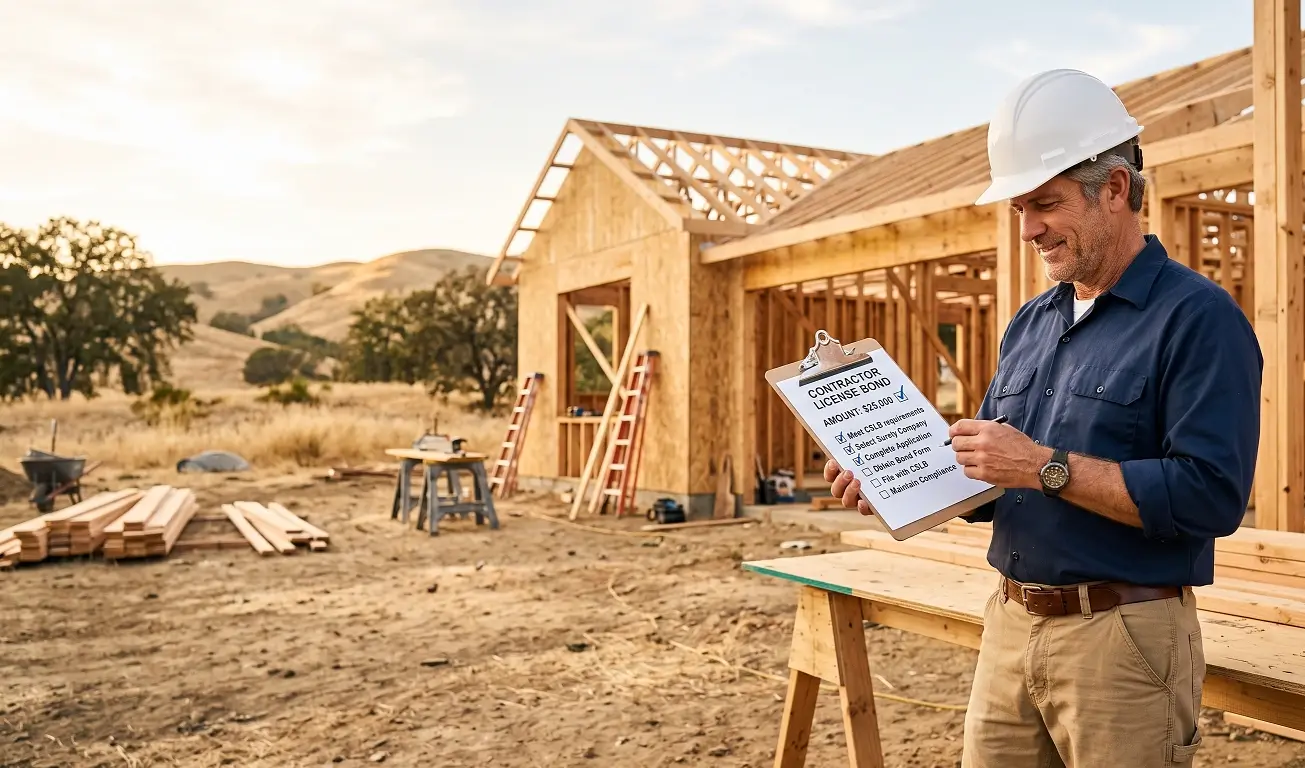
One of the most common sources of confusion for new applicants is the bonding requirement. California generally requires an active contractor license to maintain a $25,000 contractor license bond, but the contractor does not normally pay $25,000.
Instead, the contractor purchases the required bond from a surety company and pays an annual premium. For the calculations in this guide, we use $139 as the standard contractor bond cost based on a current new-license rate from Pro-Builder's Insurance Agency. Actual premiums can vary based on the surety company and your personal credit history.
Some applicants may also need a separate $25,000 Bond of Qualifying Individual. This commonly applies when the license is qualified by an RME or by an RMO who does not meet CSLB's ownership requirement for an exemption. Because this does not apply to every applicant, the additional bond premium is not included in our standard estimates.
California Contractor Exam Preparation Costs
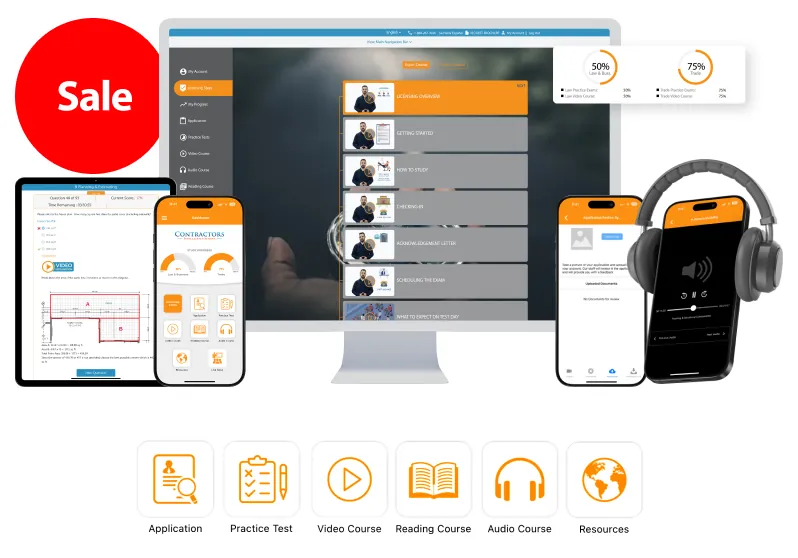
Private exam preparation is not a mandatory CSLB application fee, but it is a critical part of a realistic licensing budget. CSLB does not require an applicant to purchase a private contractor school course, but studying independently can be challenging.
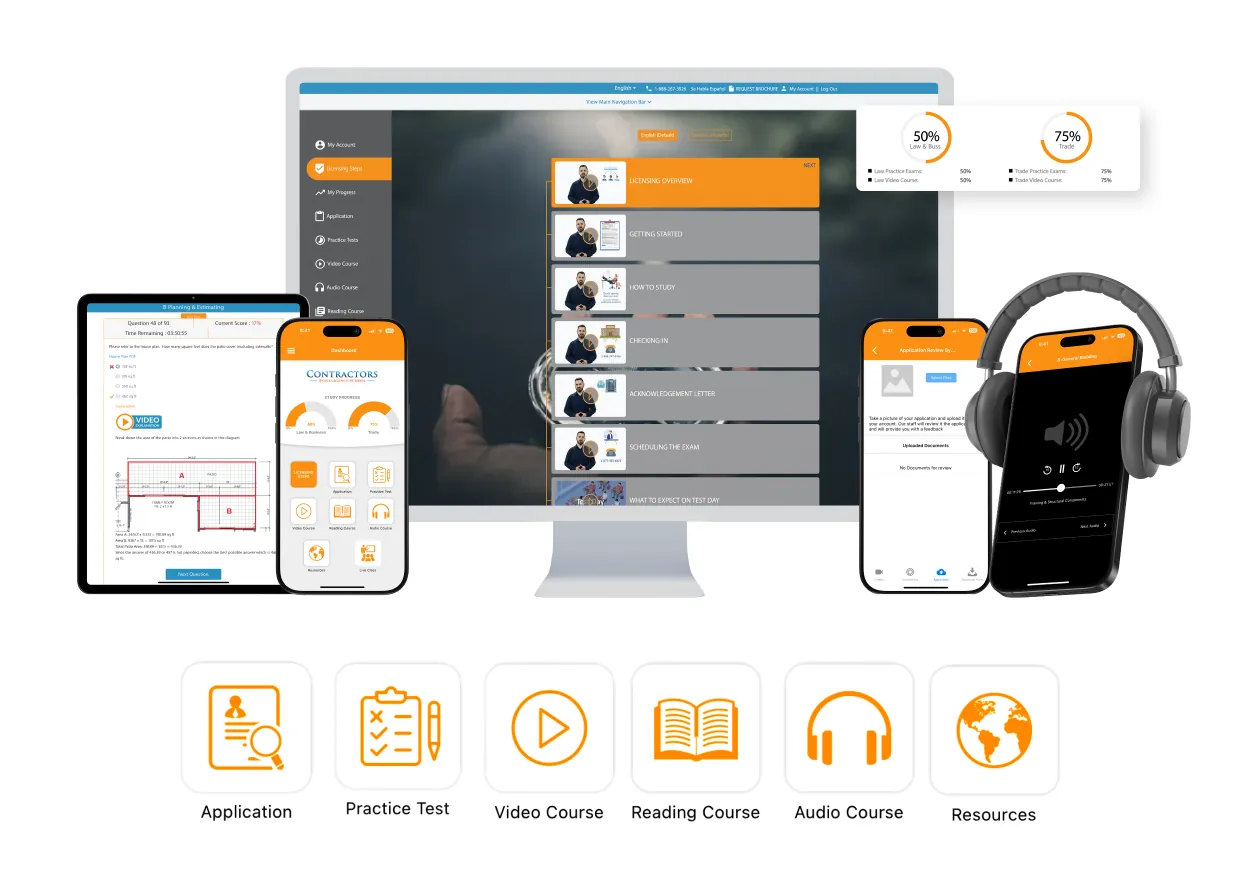
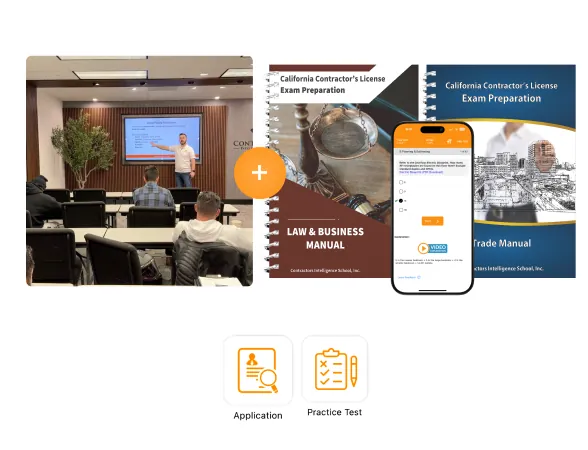
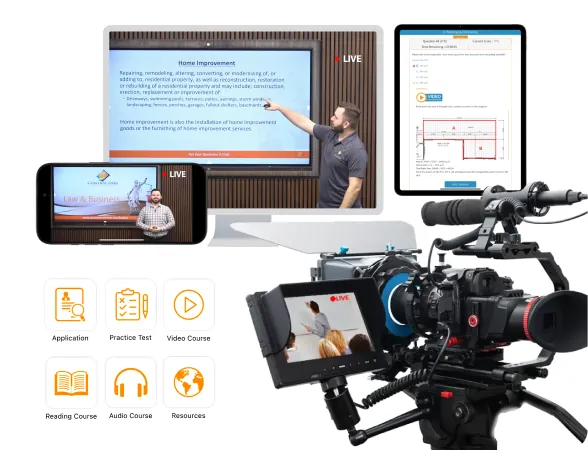
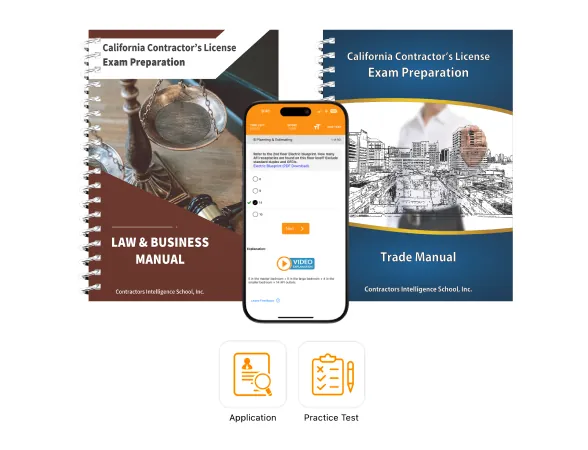
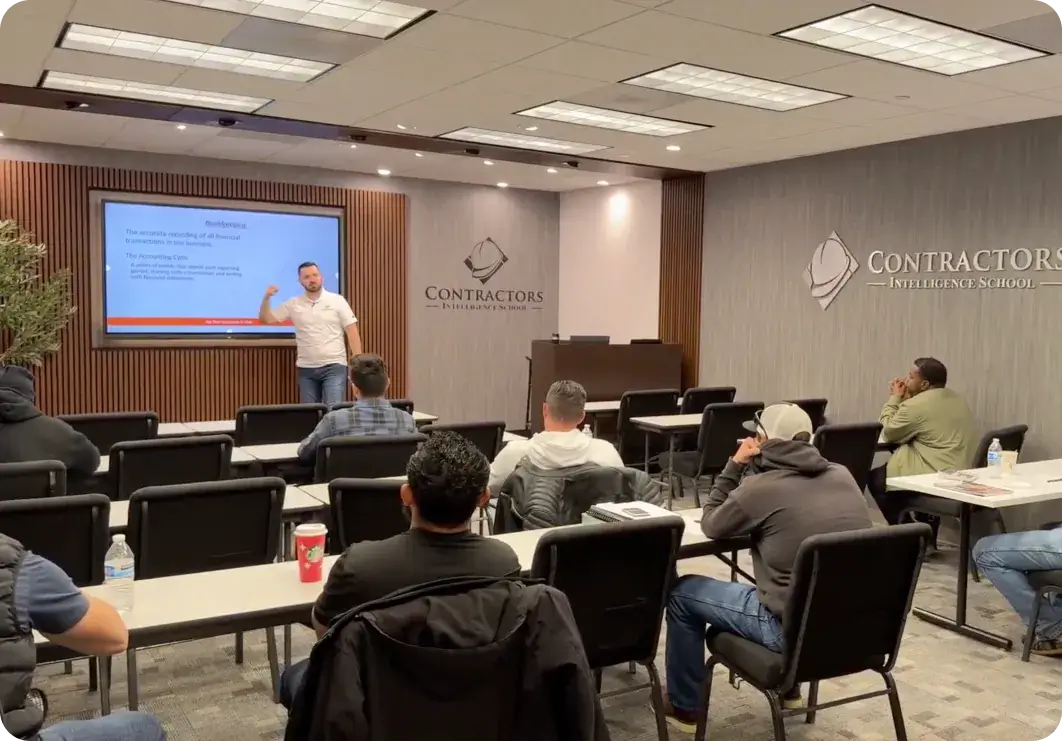
Contractors Intelligence School currently offers exam-preparation options ranging from $295 to $595, including traditional home study, online modules, live streaming, and in-class preparation. Applicants who select additional study materials or application assistance should budget accordingly.
California Contractor License Costs by Business Structure
Once you account for the standard fees, your final budget depends heavily on your business structure.
How Much Does a California Contractor License Cost for a Sole Owner?
A Sole Owner contractor license is generally the least expensive of the four business structures. A Sole Owner pays the $450 CSLB application fee and the lower $200 initial license fee, with no corporate formation expenses. After adding two PSI exams, fingerprinting, the standard $139 contractor bond, and exam preparation, the estimated first-year budget is approximately $1,262 to $1,562.
Cost to Get Licensed as a Partnership
A Partnership follows a similar licensing path, but CSLB treats it as a non-Sole Owner entity, meaning the initial license fee increases from $200 to $350. Using the same standard assumptions for testing, fingerprinting, bonding, and exam preparation, a basic Partnership will cost approximately $1,412 to $1,712 in the first year. Keep in mind that Limited Partnerships may have additional legal or registration costs not included here.
Cost to Get Licensed as a Corporation
A Corporation adds the cost of establishing the business entity before it can be licensed. Corporations applying for a California contractor license must be registered and in good standing with the California Secretary of State. Using a $497 formation estimate from Contractors Intelligence School, combined with the higher $350 initial license fee and standard exam costs, a Corporation costs approximately $1,909 to $2,209 to set up and license. While California corporations are subject to an $800 minimum franchise tax, newly incorporated entities are generally exempt during their first taxable year, making it an ongoing expense rather than a startup cost.
Cost to Get Licensed as an LLC
A Limited Liability Company has the highest estimated cost by a wide margin. While the business formation cost is similar to a Corporation, CSLB imposes strict additional bonding and insurance requirements on LLCs.
On top of the regular $25,000 contractor bond, an LLC must maintain a separate $100,000 LLC Employee/Worker Bond (estimated at $2,000/year) and at least $1 million in general liability insurance (estimated at $2,000/year). Furthermore, LLCs are subject to the $800 California annual tax beginning in their first year. Combined with standard licensing fees, an LLC costs approximately $6,709 to $7,009 to establish and license.
General Liability and Workers' Compensation Insurance Costs
General liability insurance and workers' compensation are separate expenses with very different rules.
General liability insurance is not universally required by CSLB for every contractor entity. The major exception is an LLC contractor license, which must carry at least $1 million in liability insurance for five or fewer personnel of record. However, even if CSLB does not require it for your Sole Proprietorship or Corporation, a customer, general contractor, or project owner likely will require proof of insurance before letting you on a job site.
Workers' compensation insurance (or a valid Certification of Self-Insurance), on the other hand, is generally required the moment a contractor hires employees. Even if you have zero employees, California law mandates workers' compensation coverage if you hold any of the following classifications:
- C-8 Concrete
- C-20 Warm-Air Heating, Ventilating and Air-Conditioning
- C-22 Asbestos Abatement
- C-39 Roofing
- D-49 Tree Service
Because workers' compensation premiums depend heavily on your specific classification, payroll, and the physical risk of the work performed, these premiums are not included in our standard estimates.
For a deeper explanation of when coverage is required, see our guide: Do California Contractors Need Workers' Compensation? CSLB Rules Explained.
Recurring Costs After You Get Licensed
The first-year cost of obtaining a California contractor license is different from the ongoing cost of maintaining the business.
CSLB currently charges $450 for a timely active Sole Owner renewal and $700 for a timely active non-Sole Owner renewal, generally paid every two years. Your contractor bond, and the additional LLC Employee/Worker Bond when applicable, must remain continuously in effect. Premium and renewal terms vary by surety company and bond term.
Corporations must plan for California's minimum franchise tax after the first taxable year, while an LLC owes its $800 annual tax every year. Depending on income, a California LLC may also owe an additional fee once its California-source annual income reaches $250,000.
California Contractor License Cost FAQs
How much does it cost to get a California contractor license?
A new applicant may spend approximately $1,262 to $1,562 as a Sole Owner, $1,412 to $1,712 as a Partnership, $1,909 to $2,209 as a Corporation, or $6,709 to $7,009 as an LLC. The actual cost depends on the business structure, bonding, insurance, fingerprinting, and exam preparation.
How much is the CSLB application fee, and is it refundable?
The CSLB application fee is $450 for one classification. This fee is nonrefundable once the application has been filed because CSLB treats it as a processing fee earned when the application is received. The fee is not refunded even if the application is later denied, rejected, or allowed to become void.
How much do the California contractor license exams cost?
PSI charges $51.43 per examination registration. A typical applicant taking both the Law & Business and a trade examination pays a total of $102.86.
Do I have to pay $25,000 for a California contractor bond?
No. The $25,000 is the required bond coverage amount, not the price of the bond. The contractor pays an annual premium to a surety company. This guide uses a typical $139 new-license bond premium for its cost examples.
Does a California contractor need general liability insurance?
Not every contractor is universally required by CSLB to maintain general liability insurance. However, LLC contractor licenses are specifically required to carry liability insurance, beginning at $1 million in coverage for five or fewer personnel of record.
Which California contractor business structure costs the most?
An LLC has the highest first-year cost because it must meet additional CSLB bonding requirements (the $100,000 worker bond), strict liability-insurance mandates, and is subject to California's $800 annual LLC tax in its first year.
California Contractor License Cost Checklist
The total cost of getting a California contractor license depends largely on the business structure you choose. Based on the assumptions used in this guide, a Sole Owner may spend approximately $1,262 to $1,562, while an LLC may spend approximately $6,709 to $7,009 during the first year.
The CSLB application fee is only one part of the overall licensing budget. Applicants should also plan for PSI examination fees, fingerprinting, a contractor bond, exam preparation, and any business-formation costs that apply to their entity.
Corporations and LLCs generally require a larger budget because of formation and ongoing business expenses. LLCs have the highest estimated cost because they must also maintain a $100,000 LLC Employee/Worker Bond, qualifying liability insurance, and the $800 California annual LLC tax.
Before applying, decide whether the license will be issued to a Sole Owner, Partnership, Corporation, or LLC. Once that decision is made, you can identify the costs that actually apply to your situation and build a more accurate first-year and ongoing budget.
Published on: October 9, 2026




 $495.00

 Live Streaming Class

 Halloween Special | Save $655
 Full Online Course